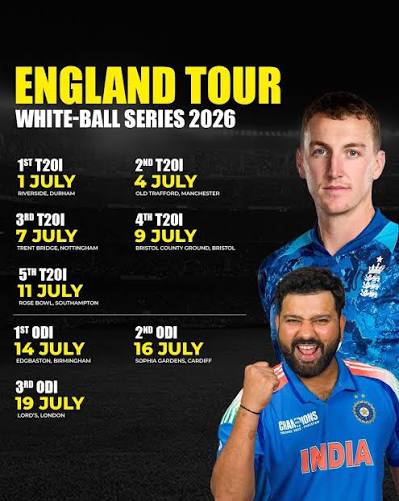
When India’s white-ball squad landed in the United Kingdom in the summer of 2026, few could have predicted the rollercoaster that would follow. Over the course of nearly three weeks, from 1 July to 19 July, the two old rivals contested five T20 Internationals and three One Day Internationals across some of England’s most storied venues. What unfolded was a tour of stark contrasts: a chastening T20I series for India that raised uncomfortable questions about their adaptability overseas, followed by an ODI leg that swung dramatically from match to match before England sealed a famous 2-1 triumph at Lord’s — their first bilateral ODI series win over India since 2018.
This was a series that had everything: the return of legends, the emergence of new stars, record-breaking innings, and a finale at the Home of Cricket that will be remembered for years. Here is the full story of the India vs England white-ball series of 2026.
The Backdrop: Two Teams at a Crossroads
India and England share one of white-ball cricket’s fiercest and longest-running rivalries. Heading into the 2026 tour, India held the better overall head-to-head record in both formats, and the two sides had traded blows in recent ICC tournaments, including a memorable knockout clash at the T20 World Cup earlier in 2026 that India had won. But bilateral series in England have historically been a different proposition, with the hosts’ home record keeping every contest competitive regardless of form.
England arrived at the series in a state of transition. Brendon McCullum had been removed as Test head coach following a disappointing run in red-ball cricket, but he retained charge of the white-ball sides, and under the on-field leadership of Harry Brook, England were determined to reaffirm their aggressive limited-overs identity. Their ODI record, however, was a genuine concern: since 2024 they had lost five of seven bilateral ODI series and endured a winless Champions Trophy campaign, meaning the 50-over leg of this tour carried real significance for their rebuild ahead of the 2027 ODI World Cup.
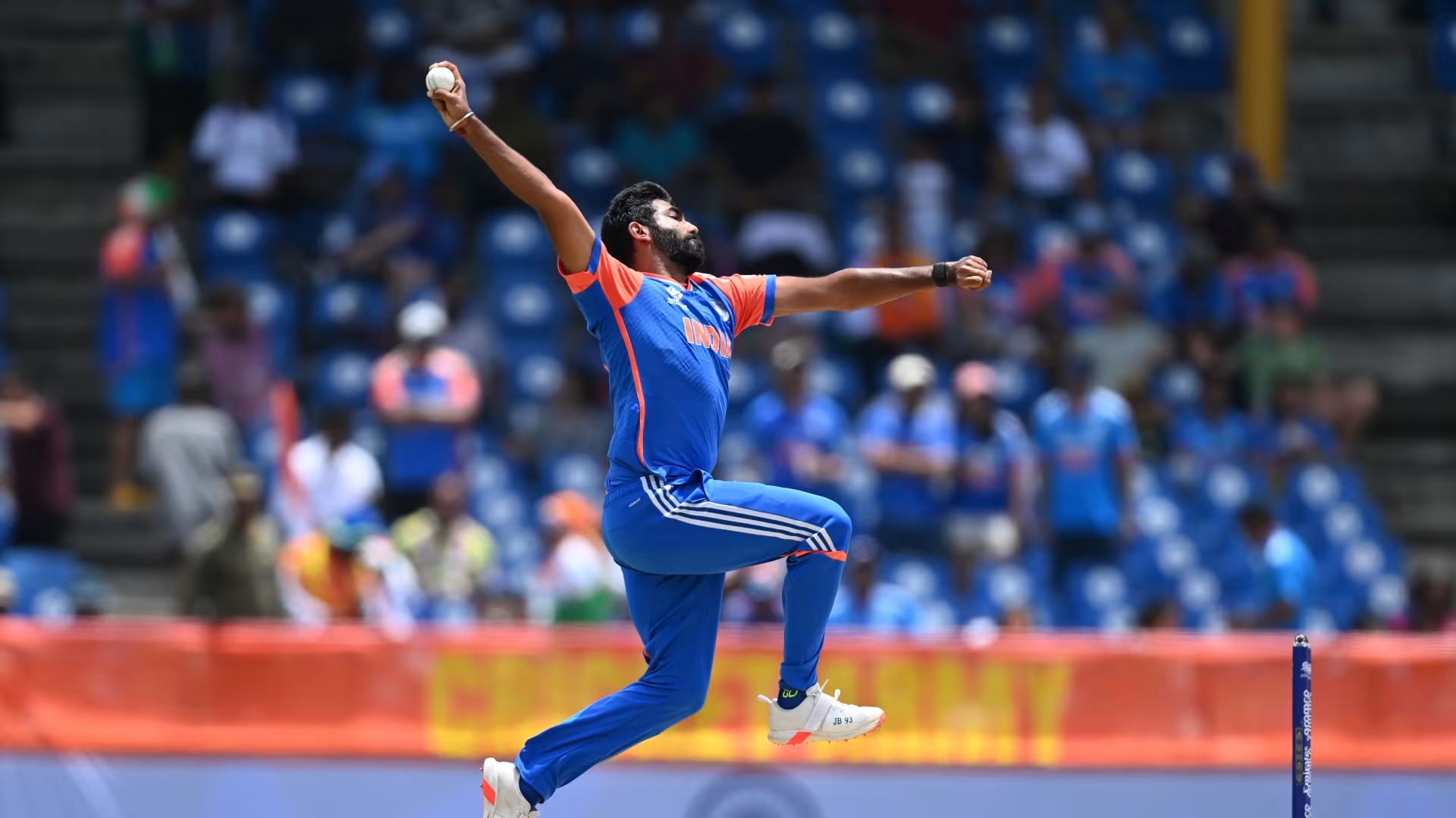
India, meanwhile, arrived under a cloud of their own. Just before the England series, they had suffered a shock 0-2 T20I series defeat to Ireland — a result that stunned the cricketing world and put their preparation under immediate scrutiny. Shreyas Iyer led the T20I side, with Abhishek Sharma providing firepower at the top and Arshdeep Singh spearheading the pace attack. The ODI squad, by contrast, promised something entirely different: the return of Virat Kohli, Rohit Sharma, and Jasprit Bumrah, all playing ODI cricket for the first time since January, alongside captain Shubman Gill.
The T20I Series: England’s Emphatic Statement
The T20I leg began at the Riverside in Chester-le-Street on 1 July, but the famous English weather had the final say, and the opening match was abandoned without a result. From that point on, however, there was only one team in the contest. England won all four remaining T20Is — at Old Trafford, Trent Bridge, Bristol, and Southampton — to complete a comprehensive 4-0 series victory.
It was a performance of remarkable discipline and aggression from the hosts. England’s batting consistently set the tone, playing with the fearlessness that has defined their white-ball philosophy, while Jofra Archer led a pace attack that repeatedly unsettled India’s line-up with hostility and precision. For a side that had emerged from a turbulent period in Test cricket, the T20I series became a showcase of renewed confidence, and it reinforced Harry Brook’s growing stature as a white-ball leader.
For India, the series was nothing short of a nightmare. Combined with the Ireland debacle, the defeats stretched India’s winless run in T20Is to seven matches — their worst sequence across formats since the tour of Australia in 2014-15. For a team that had dominated the shortest format over the previous two years, winning the 2024 T20 World Cup and going years without losing a bilateral series, this was a jarring fall. Questions swirled around the team’s ability to adapt to seaming, swinging overseas conditions, around selection choices, and around whether the T20I side had lost its way in the post-transition era. The tour, at its halfway point, looked in danger of becoming a write-off.
The ODI Series: The Big Guns Return
Everything changed when the tour moved to its 50-over leg. The injection of Rohit Sharma, Virat Kohli, and Jasprit Bumrah transformed both the composition and the aura of the Indian side. Suddenly, a team that had looked rudderless in the T20Is carried the weight of experience, pedigree, and star power — and with the 2027 World Cup on the horizon, this was the format that mattered most to both camps.
First ODI, Edgbaston: India Find Their Pulse
The series opener in Birmingham on 14 July saw India’s flat-lining tour finally find its heartbeat. On a warm day at a ground that had been an English fortress — the hosts had not lost an ODI there since 2014 — India produced a clinical all-round performance to win by six wickets with 28 balls to spare.
England’s innings followed a strange arc. Their openers ground out a patient 61-run stand, absorbing a magnificent new-ball spell from Bumrah without taking risks. But then came an extraordinary collapse: five wickets tumbled for just 19 runs in the space of 27 balls, ripping the heart out of the innings. Joe Root and Liam Dawson mounted a spirited rescue act with a stand of 121, but the damage proved irreparable.
India’s chase was anchored by a composed start from captain Shubman Gill, before Axar Patel and Washington Sundar applied the finishing touches with an assured partnership. Washington brought up his half-century with a lofted straight six off Adil Rashid to seal the win — a moment of release for a touring side that had endured weeks of misery. India led 1-0, and their five-match ODI winning streak against England stretched their dominance in the format.
Second ODI, Cardiff: Root’s Masterclass Levels the Series
England’s response in the day-night contest at Sophia Gardens on 16 July was everything their under-fire ODI side needed. Cardiff’s quirky dimensions — short straight boundaries and deep square pockets — promised a different tactical challenge, and it was England who adapted better.
Batting first, India were bowled out for 233 in 44 overs. Shreyas Iyer top-scored with 66 and Virat Kohli contributed a fluent 65, but the innings never fully escaped the stranglehold applied by England’s seamers. Jofra Archer claimed 3 for 47 and Gus Atkinson 3 for 50 as the tourists lost wickets at crucial moments and fell well short of a par total.
The chase belonged to one man. Joe Root, the evergreen glue of England’s batting, produced a masterful unbeaten 99 from 133 balls, guiding his side home by four wickets with 35 balls remaining. There was a poignant footnote — Jos Buttler, batting down at No. 6 amid an extended lean run in the format, was bowled middle stump by Axar Patel, prolonging his curious struggles against India. But the night was Root’s, and his class ensured the series would go to a decider at Lord’s, level at 1-1.
Third ODI, Lord’s: A Run-Fest for the Ages
The finale on 19 July delivered one of the great modern ODIs. Under sunny London skies, England won the toss, batted first, and produced a batting display of staggering brutality. Ben Duckett smashed 141 — the highest individual ODI score ever recorded at Lord’s — while young Jacob Bethell struck a superb 91. Together they put on 192 for the first wicket, the highest partnership for any wicket against India. Joe Root (74 not out) and Buttler (41 not out) then piled on the late-innings runs as England finished on 387 for 3, the highest List A total in Lord’s history, setting India a monumental 388.
What followed was pure theatre. Rohit Sharma, facing what many suspected could be his final innings on English soil, rolled back the years with a magnificent 138 — his 34th ODI century, reached in just 84 balls, and the first ODI hundred by an Indian male batter at Lord’s. His eighth century in England was laced with trademark pulls, drives, and deft dabs, and he combined with Gill (a crisp 77) in a 147-run stand that briefly made the impossible look plausible. Kohli chipped in with 74, his 133rd score of fifty or more in the format.
But the mountain was simply too high. India closed on 360 for 7 — a heroic effort, yet 27 runs short. England had held their nerve with the ball when it mattered, and the celebrations at the Home of Cricket reflected the magnitude of the achievement: a 2-1 series victory, their first over India in a bilateral ODI series since 2018, and only their eighth in 22 attempts overall.
Jacob Bethell was named Player of the Match for his 91 and a wicket, while Joe Root’s 249 runs across the three games earned him Player of the Series. Sam Curran finished as the leading wicket-taker in the ODIs with six, ahead of Axar Patel and Archer with five apiece.
Key Takeaways from the Tour
For England, the tour was a resounding validation of their white-ball direction. The 4-0 T20I sweep confirmed the progress made under Harry Brook, while the ODI series win — achieved despite falling behind — suggested a corner had been turned in a format that had troubled them for two years. Duckett and Bethell’s emergence as a devastating opening pair, Root’s timeless consistency, and the depth of a pace attack featuring Archer, Atkinson, and Curran all bode well for the road to the 2027 World Cup. McCullum’s continued stewardship of the white-ball sides, even after his Test sacking, now looks a settled arrangement.
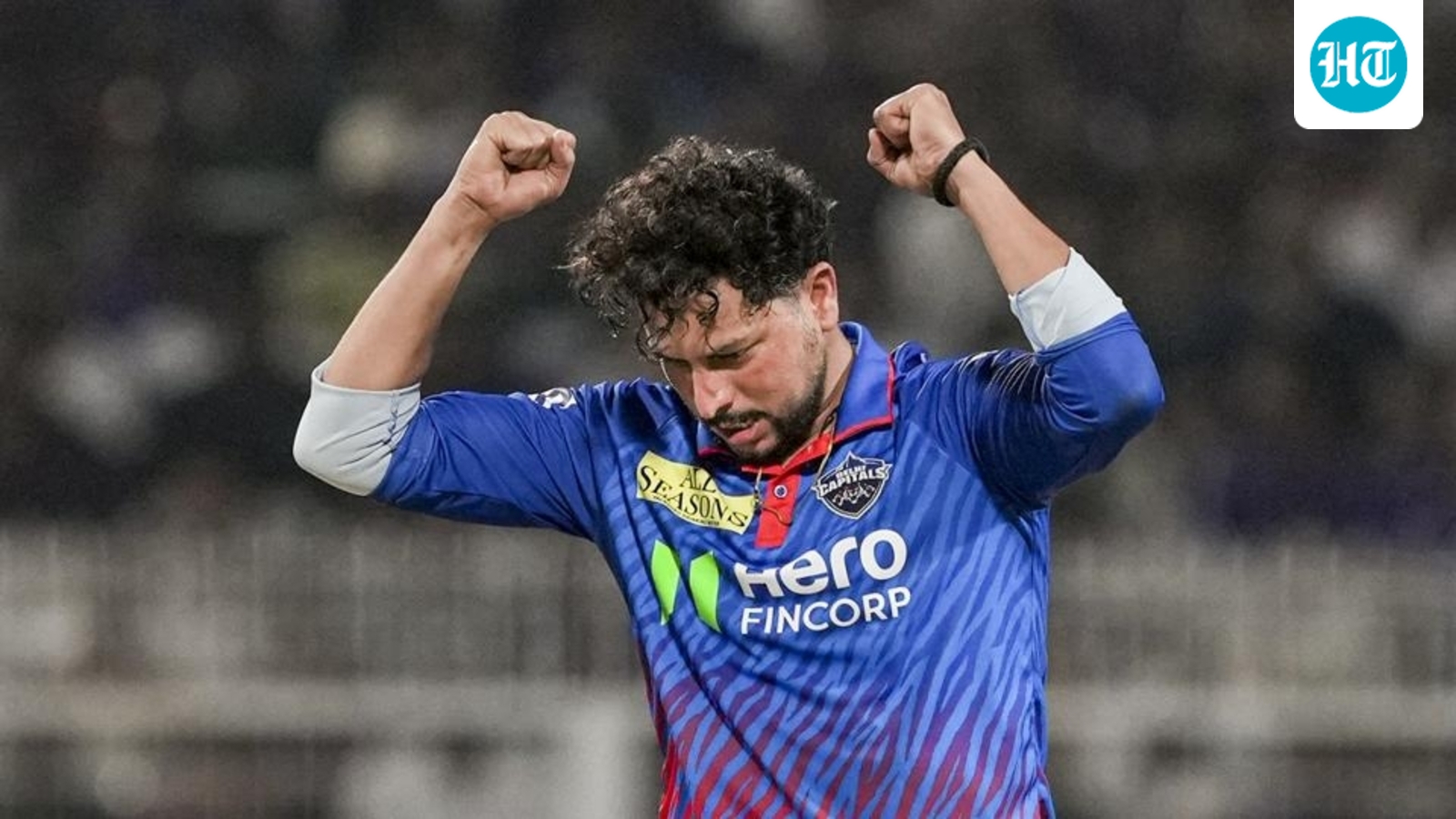
For India, the picture is more complicated. The T20I side has serious soul-searching to do after eight winless matches across the UK leg of the summer, with questions over selection, tactics, and adaptability in foreign conditions demanding honest answers. The ODI series offered more encouragement — Rohit and Kohli proved they remain forces at the highest level, Gill led with composure and scored runs, and Bumrah’s new-ball threat was undiminished. Yet nagging concerns persist, most notably the team balance that forced them to field four tailenders at Lord’s while leaving out wrist-spinner Kuldeep Yadav, a decision that drew significant criticism.
And then there is the question of the veterans. Rohit’s imperious Lord’s century, played amid swirling retirement chatter that he breezily dismissed afterwards, felt like both a statement and, possibly, a farewell to English crowds. Whether he and Kohli carry on to the 2027 World Cup remains one of Indian cricket’s defining storylines.
Final Word
The 2026 India vs England white-ball series delivered on every promise of this great rivalry. England were deserved winners across the tour, dominant in the T20Is and resilient in the ODIs, while India departed with pride restored but problems unsolved. If the Lord’s run-fest was any indication of what these two teams can produce, the next chapter — likely on the biggest stage of all in 2027 — cannot come soon enough.
Series results: T20Is — England won 4-0 (1st match abandoned). ODIs — England won 2-1 (India won at Edgbaston; England won at Cardiff and Lord’s).