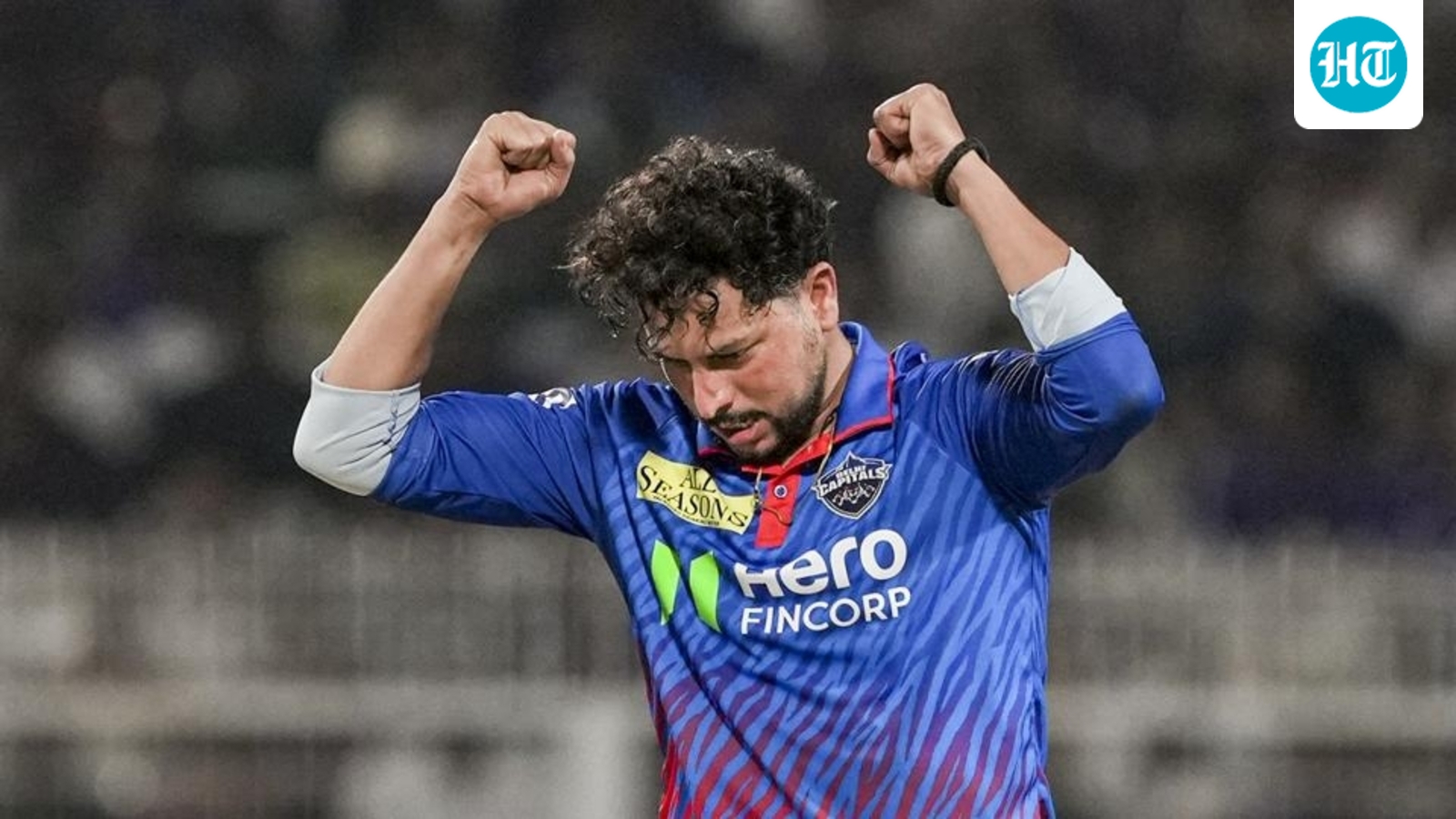
When the Indian Premier League launched in 2008, critics dismissed it as a glitzy sideshow — a hit-and-giggle tournament that would produce entertainers rather than cricketers. Nearly two decades later, that argument has been comprehensively demolished. The IPL has become the world’s most productive finishing school for cricket, a pressure cooker where raw talent is refined into match-winning steel. Playing in front of 60,000 screaming fans, sharing dressing rooms with legends, and facing the best bowlers on the planet week after week has fast-tracked the development of countless players who went on to win games — and trophies — for their countries.
This article celebrates the players who best embody that transformation: cricketers who arrived at the IPL as promising unknowns or unfulfilled talents and emerged as genuine international match winners.
Jasprit Bumrah: From Unorthodox Rookie to the World’s Best Bowler
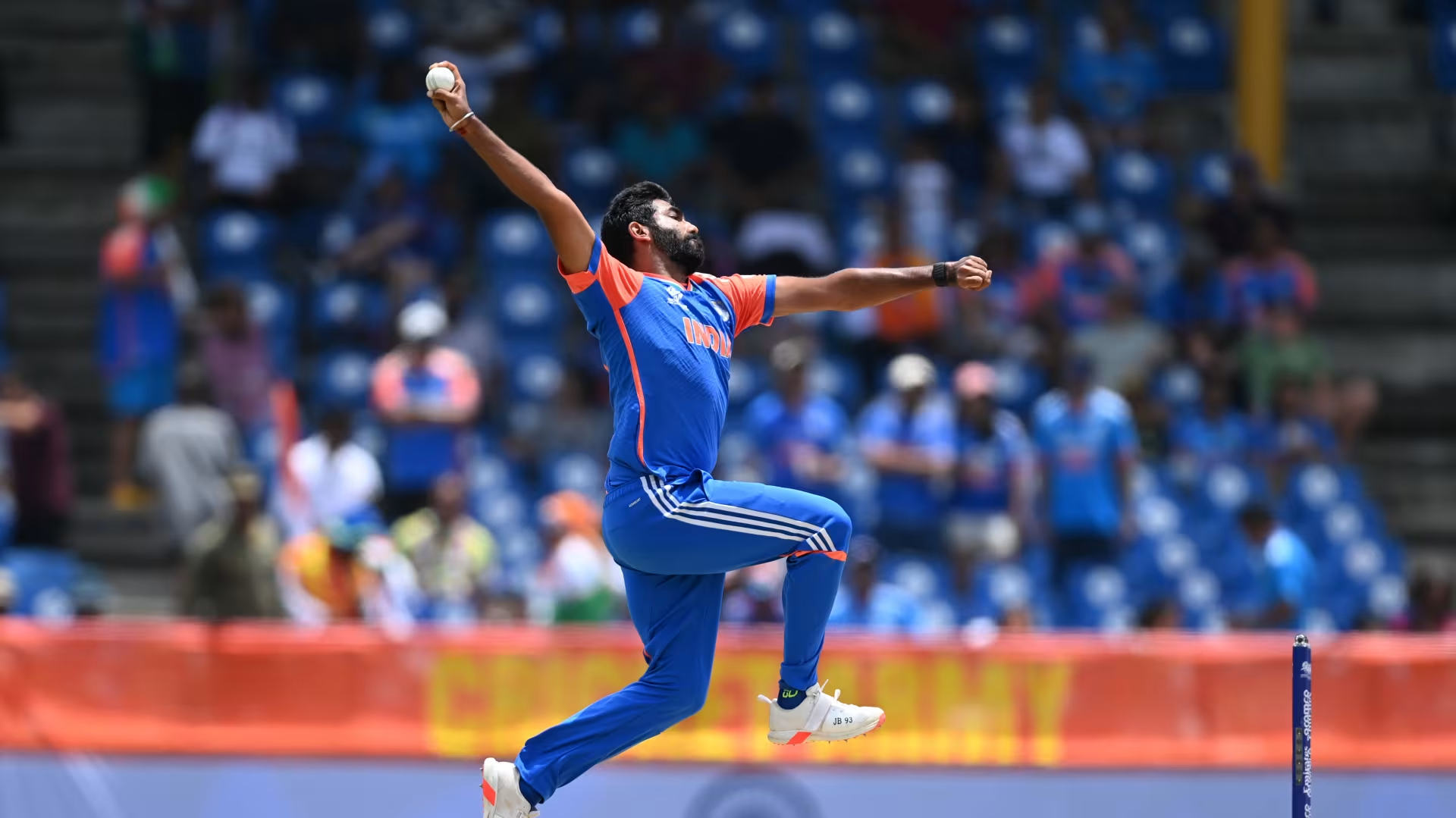
Perhaps no story captures the IPL’s transformative power better than Jasprit Bumrah’s. When Mumbai Indians handed a 19-year-old with a bizarre, slingy action his debut in 2013, few outside Gujarat’s domestic circuit had heard of him. His run-up looked like a casual jog; his action seemed biomechanically impossible. Yet John Wright, Mumbai’s talent scout, had seen something special in a Syed Mushtaq Ali Trophy match, and the franchise backed its instinct.
Under the mentorship of Lasith Malinga — the master of death bowling — Bumrah turned his unusual action into a weapon. He learned the yorker’s dark arts, developed a wicked slower ball, and honed the temperament to bowl the tournament’s most pressurised overs. By the time he made his India debut in 2016, he was already battle-hardened.
The rest is modern cricket history. Bumrah became the spearhead of India’s attack across all three formats, delivering iconic spells from Johannesburg to Melbourne. His performances in the 2024 T20 World Cup, where he was named Player of the Tournament as India lifted the trophy, showcased a bowler operating on a different plane. The IPL didn’t just discover Bumrah — it built him.
Hardik Pandya: The Rough Diamond Polished Into a Trophy Winner
Hardik Pandya’s journey reads like a Bollywood script. Growing up in modest circumstances in Baroda, he was picked up by Mumbai Indians in 2015 for a base price of ₹10 lakh. What the franchise got was a fearless all-rounder who could clear any boundary, bowl useful seam-up overs, and field like a livewire.
The IPL gave Pandya more than exposure; it gave him education. Playing alongside Kieron Pollard and under Ricky Ponting’s coaching, he learned game awareness, finishing skills, and how to handle fame. Within a year of his IPL breakthrough, he was in India’s T20 side. He became India’s premier seam-bowling all-rounder, a role the country had struggled to fill since Kapil Dev.
His captaincy transformation was even more striking. Handed the leadership of the newly formed Gujarat Titans in 2022, Pandya led them to the title in their debut season — batting at number four with newfound maturity and bowling crucial spells. That leadership pedigree and finishing ability translated directly to international success, culminating in his pivotal role in India’s 2024 T20 World Cup triumph, where he bowled the tournament-sealing final over against South Africa.
Rohit Sharma: Talent Fulfilled Through Leadership
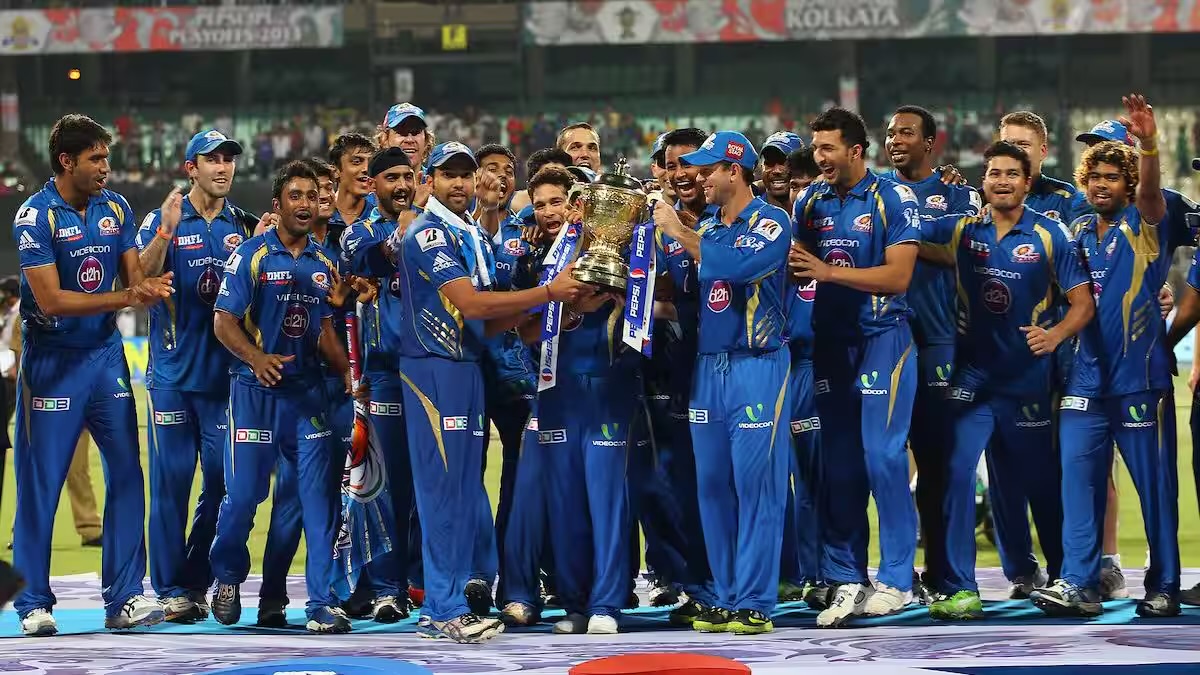
Rohit Sharma’s case is different — he was already an international cricketer before the IPL began — but the league fundamentally changed his trajectory. In the early 2010s, Rohit was cricket’s great unfulfilled promise: sublime talent, inconsistent output. Then, in 2013, Mumbai Indians made a mid-season decision to hand him the captaincy.
The move transformed both franchise and player. Rohit led Mumbai to five IPL titles, becoming the most successful captain in the league’s history. The responsibility sharpened his cricket brain and his batting; the same year he took over Mumbai’s captaincy, he was promoted to open the batting for India in ODIs — a move that unlocked one of the great white-ball careers. Three ODI double-centuries, a record five hundreds in a single World Cup (2019), and eventually the captaincy of India followed. When Rohit lifted the T20 World Cup in 2024 and the Champions Trophy in 2025 as India’s captain, the leadership foundations laid in the IPL were unmistakable.
Suryakumar Yadav: The Late Bloomer Who Became the World’s Best T20 Batter
For years, Suryakumar Yadav was a domestic workhorse — prolific for Mumbai in the Ranji Trophy but overlooked at the highest level. It was the IPL, first with Kolkata Knight Riders and then spectacularly with Mumbai Indians from 2018, that showcased his 360-degree strokeplay to the world. His ability to scoop, ramp, and lap the fastest bowlers with impossible audacity made him unignorable.
He was 30 when he finally made his India debut in 2021 — ancient by modern standards. Yet within eighteen months, he had climbed to the number one ranking in ICC T20I batting, smashing centuries at strike rates that redefined what was possible in the format. His match-winning catch on the boundary in the 2024 T20 World Cup final became one of Indian cricket’s iconic moments. Without the IPL’s platform, one of the format’s greatest ever batters might never have played for India at all.
Ravindra Jadeja: From Bits-and-Pieces Player to Three-Format Great
Ravindra Jadeja won the inaugural IPL in 2008 with Rajasthan Royals as a teenager, with Shane Warne famously nicknaming him “Rockstar.” Warne’s faith in the young all-rounder — giving him responsibility and belief — set the tone for a career that would blossom into three-format greatness.
Through long years with Chennai Super Kings under MS Dhoni’s tutelage, Jadeja evolved from a bits-and-pieces cricketer into arguably the world’s best fielder, a genuinely match-winning left-arm spinner, and a batter capable of counterattacking hundreds in Test cricket. His last-ball heroics to win CSK the 2023 IPL final mirrored countless clutch performances for India, including vital contributions to the 2024 T20 World Cup and the World Test Championship campaigns. The IPL identified Jadeja’s temperament for the big moment early, and international cricket reaped the rewards for over a decade.
Rashid Khan: Afghanistan’s Global Superstar
The IPL’s transformative power extends well beyond India. When Sunrisers Hyderabad signed a 18-year-old Afghan leg-spinner named Rashid Khan for ₹4 crore in 2017, it was seen as a gamble. It became one of the great bargains in T20 history. Rashid’s rapid, unreadable wrist-spin made him the most feared spinner in franchise cricket almost overnight.
More importantly, the IPL turned Rashid into the face of Afghan cricket’s rise. The confidence, tactical education, and big-stage experience he accumulated in India translated directly into international match-winning performances. He spearheaded Afghanistan’s stunning run to the 2024 T20 World Cup semi-final — the greatest achievement in the nation’s cricketing history — and turned Afghanistan from plucky underdogs into genuine contenders. A generation of Afghan cricketers, from Noor Ahmad to Azmatullah Omarzai, has followed the pathway Rashid blazed through the IPL.
David Warner: The T20 Slugger Who Conquered Test Cricket
David Warner’s story flips the traditional development pathway on its head. Astonishingly, Warner played T20 internationals for Australia — and starred in the IPL — before he had ever played a first-class match. Purists sneered that a slogger built in the T20 laboratory could never survive Test cricket.
Warner proved them spectacularly wrong. The confidence and match-winning habit he developed in the IPL, particularly during his prolific, title-winning captaincy stint with Sunrisers Hyderabad in 2016, underpinned a Test career of over 8,700 runs, a triple-century, and two ODI World Cup victories with Australia. He became living proof that T20 franchise cricket could produce, rather than corrupt, an all-format international match winner.
Yuzvendra Chahal and the Spin Revolution
Yuzvendra Chahal’s origin story is delightfully improbable: a former junior chess champion who barely bowled for Mumbai Indians, he found his stage at Royal Challengers Bangalore. On Bengaluru’s small, batting-friendly ground — a graveyard for spinners — Chahal thrived by out-thinking batters, tossing the ball up and inviting the big shot. That fearlessness, forged in the IPL’s most hostile bowling environment, made him India’s premier white-ball wrist-spinner for years, including a starring role in memorable overseas series wins and a place in India’s 2024 T20 World Cup-winning squad.
Shubman Gill and the New Generation
The production line continues. Shubman Gill arrived at Kolkata Knight Riders in 2018 as an under-19 World Cup star and matured, over IPL seasons with KKR and Gujarat Titans, into one of the world’s premier top-order batters. His 890-run IPL season in 2023 announced a player ready to dominate internationally — and he duly became a centurion across all three formats for India and, eventually, a leadership candidate. Similarly, players like Tilak Varma, Yashasvi Jaiswal, and Abhishek Sharma have used IPL breakthroughs as springboards to match-winning international careers, with Jaiswal’s fearless strokeplay translating almost seamlessly from franchise cricket to Test double-hundreds.
Why the IPL Works as a Finishing School
Several factors explain why the IPL has been so effective at manufacturing international match winners.
First, there is the pressure. IPL games are watched by hundreds of millions, dissected endlessly, and played in stadiums that roar like international venues. A young player who has defended 12 runs in a final over at Eden Gardens does not freeze when asked to do the same in a World Cup.
Second, there is the proximity to greatness. Sharing a dressing room with Dhoni, Warne, Malinga, Kohli, or de Villiers compresses years of learning into weeks. Bumrah learned yorkers from Malinga; Jadeja learned calmness from Dhoni; Pandya learned power-hitting from Pollard. This mentorship model has no parallel in world cricket.
Third, there is exposure to quality. Domestic cricketers who might otherwise face international-class bowling only after national selection instead face Bumrah, Rashid, and Starc every week. The gap between domestic and international cricket — historically the graveyard of promising careers — has narrowed dramatically.
Finally, there is opportunity. The IPL’s scouting networks reach into small towns and forgotten corners of the cricketing world. Players like Bumrah (Ahmedabad), Pandya (Baroda), and Umran Malik (Jammu) might never have been noticed by traditional pathways.
Conclusion
The IPL has evolved from entertainment product to the beating heart of cricket’s talent ecosystem. Its greatest legacy is not the broadcast revenue or the packed stadiums, but the roll call of match winners it has delivered to international cricket: Bumrah’s toe-crushing yorkers in World Cup finals, Suryakumar’s gravity-defying catch, Pandya’s ice-cold final over, Rashid Khan carrying a nation’s dreams, Rohit lifting long-awaited trophies.
For every one of these stars, the pattern is the same: the IPL provided the stage, the education, and the pressure — and they provided the talent and the hunger. Together, they transformed potential into performance and franchise promise into international glory. As new generations of teenagers walk out under the IPL lights, one certainty remains: somewhere among them are the international match winners of tomorrow, already being forged.